

A DJ-style VFX daemon for Philips Hue, running on a QNAP NAS
Link: https://www.youtube.com/watch?v=w_EbUPbOirw
Play music anywhere in the house. The NAS listens, finds the beat, and drives your Hue lights like a small lighting desk — strobe on the drop, lights joining one by one through a build-up, colour changing with the music. No Home Assistant, no cloud, no PC left running.
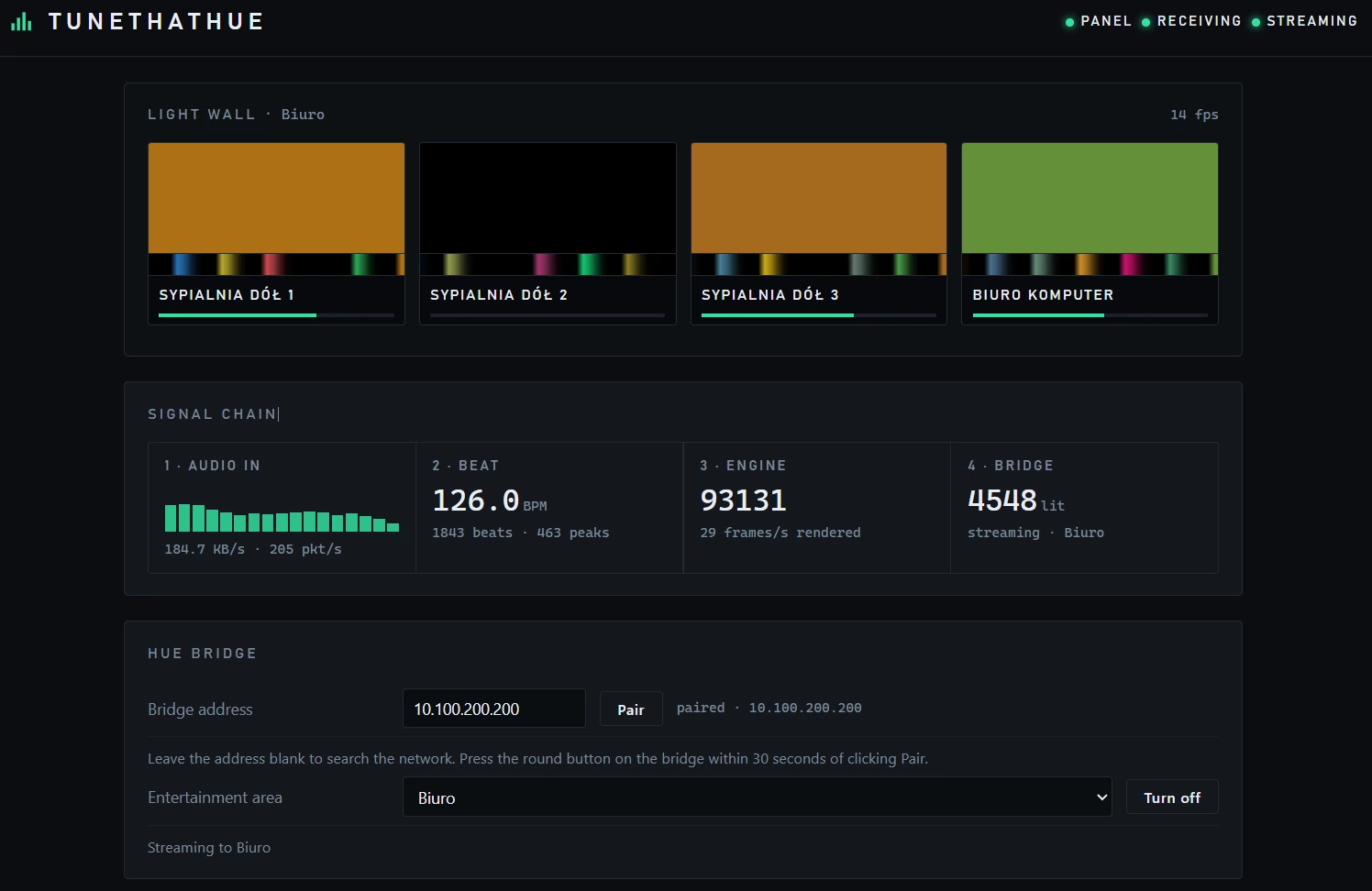
The light webUI — wall what the bridge is actually being sent, live:
Link: https://www.youtube.com/watch?v=w_EbUPbOirw
Play music anywhere in the house. The NAS listens, finds the beat, and drives your Hue lights like a small lighting desk — strobe on the drop, lights joining one by one through a build-up, colour changing with the music. No Home Assistant, no cloud, no PC left running.
The light webUI — wall what the bridge is actually being sent, live:
What it does
- Beat and tempo tracking
Reads the tempo from the audio and keeps a beat grid, so every effect lands on the beat instead of near it. - Bars and phrases
Counts bars and follows the phrasing, so effects change where the music changes, not on a timer. - Build-up detection
When the track is rising into a drop, lights are recruited one at a time; on the drop, everything fires together. - Strobe (VFX)
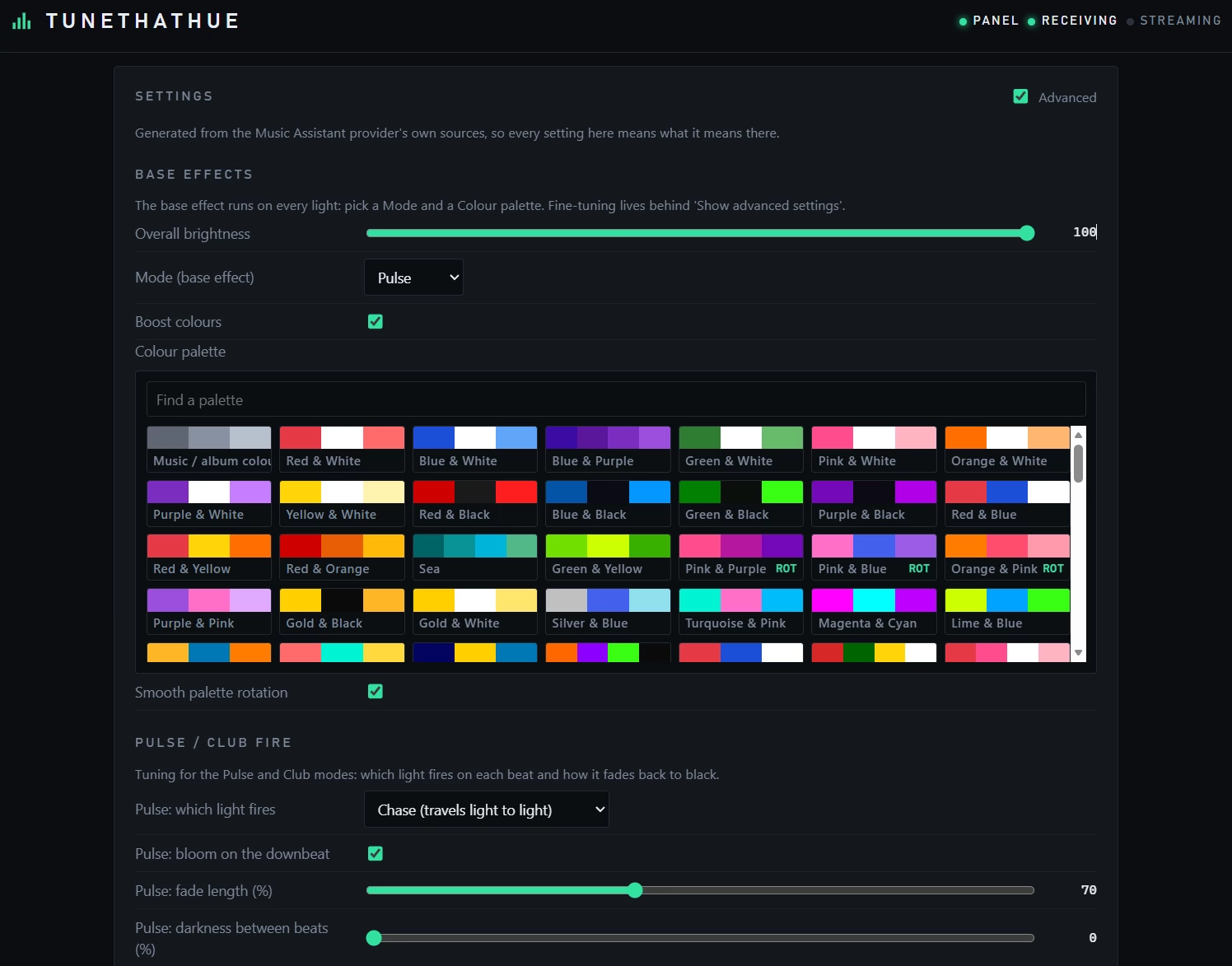
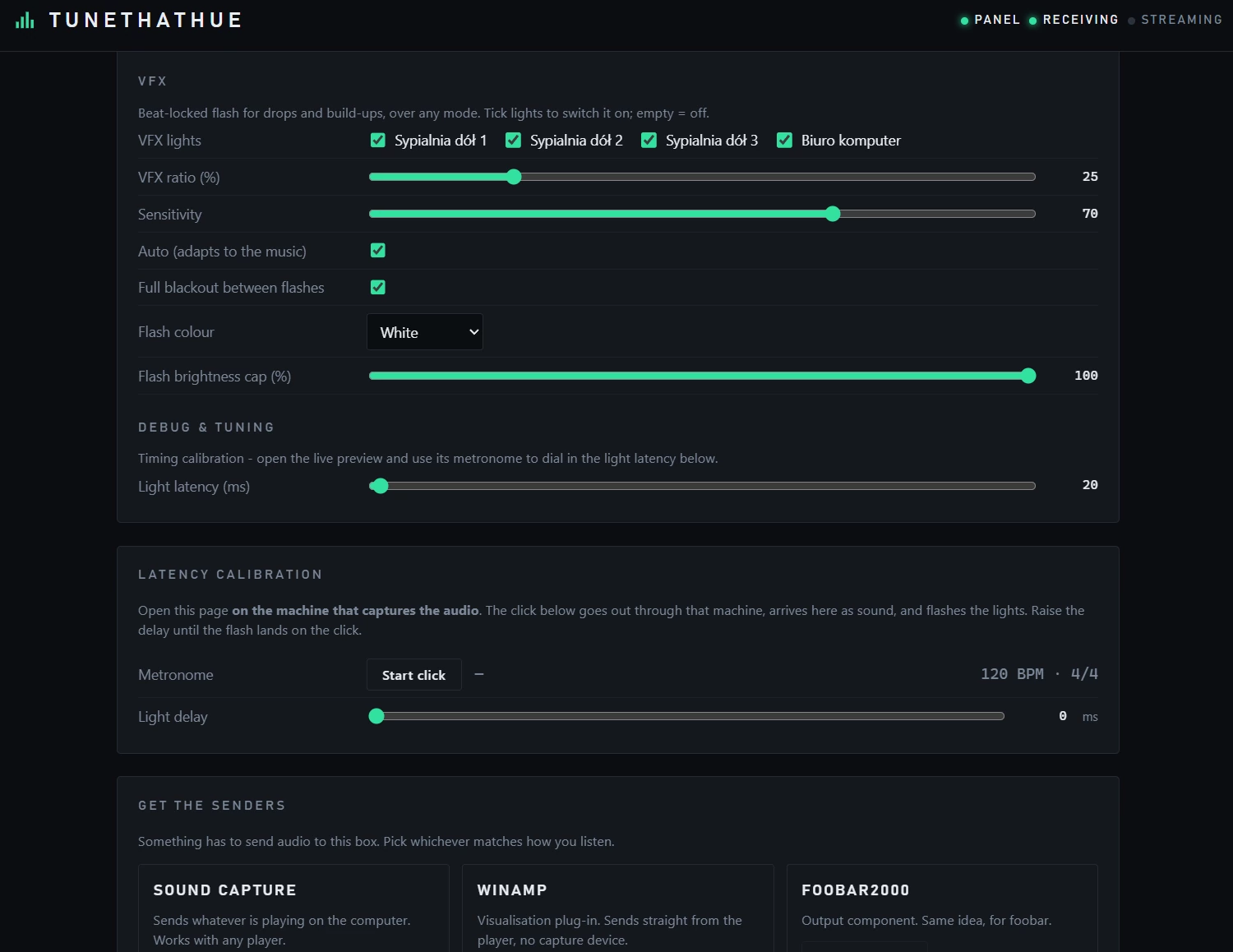
Beat-locked flashing with its own rate, duty, colour, brightness cap and blackout between flashes. Pick which lights take part, by name. - 155 colour palettes
or colours taken from the music itself, with optional rotation every N beats. - Live light wall
The panel shows the exact frames sent to the bridge, with a two-second trail under each light — you can see the rhythm, not just the result. - Sendspin emulation
The daemon speaks the same protocol Music Assistant uses to feed a visualiser, so the effects engine runs unchanged outside Music Assistant. - Senders for Windows
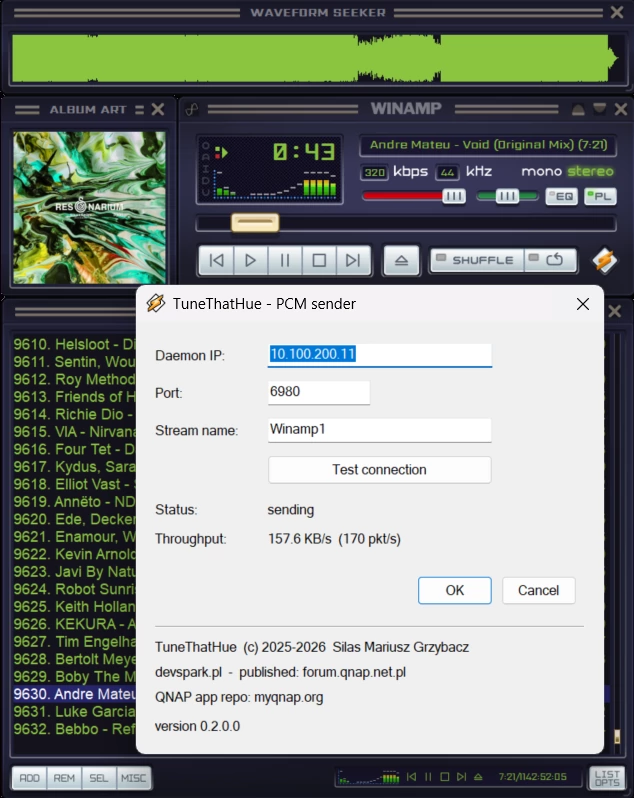
a Winamp plug-in, a foobar2000 component, and Sound Capture, which sends whatever is playing on the computer — any player, browser or game.


![slskd (Soulseek P2P client with Web interface) [x86_64]](/data/resource_icons/0/301.jpg?1760452626)
![Rtorrent 15 [x86_64]](/data/resource_icons/0/284.jpg?1752069466)
